Cuando tú o alguien a quien quieres necesita ayuda, saber a quién llamar puede hacer que una situación abrumadora resulte un poco más manejable.
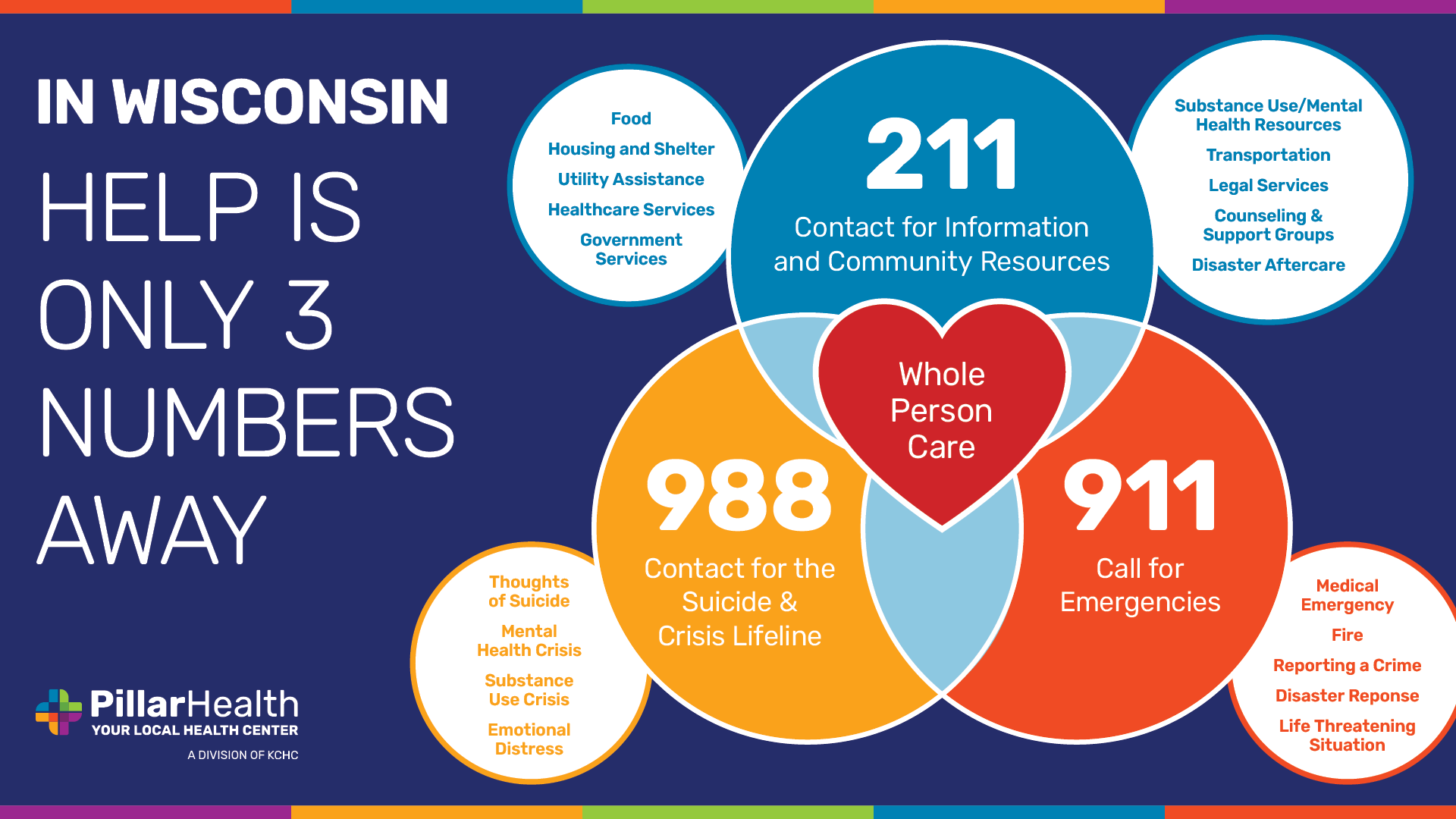
En Wisconsin, tres números sencillos pueden poner en contacto a personas y familias con diferentes niveles de apoyo: el 211, el 988 y el 911.
Cada número tiene una finalidad diferente, desde encontrar ayuda para la alimentación o la vivienda hasta recibir apoyo inmediato en caso de crisis de salud mental u obtener ayuda durante una emergencia que ponga en peligro la vida. Conocer la diferencia puede ayudarte a ponerte en contacto con el recurso adecuado en el momento oportuno.
En Pillar Health, creemos que este conocimiento es una parte importante de la atención integral de la persona. La salud física, el bienestar mental y las circunstancias que afectan a nuestra vida cotidiana suelen estar interrelacionadas. Saber a quién acudir para obtener ayuda inmediata, así como dónde encontrar apoyo continuo, puede marcar una diferencia significativa.
El apoyo no tiene por qué empezar con una crisis
Es importante saber qué hacer durante una crisis, pero la atención de la salud mental no tiene por qué esperar a que alguien llegue a ese punto.
La salud mental puede influir en la toma de decisiones, las relaciones, los estudios, el trabajo y la vida cotidiana. En Pillar Health y en el Centro de Salud Comunitario de Kenosha, la salud conductual es una parte importante de la salud general. Nuestros profesionales de salud conductual colaboran con otros miembros del equipo asistencial para ayudar a los pacientes a avanzar hacia sus objetivos individuales y abordar el bienestar integral.
Los servicios de salud conductual incluyen psiquiatría y psicoterapia, con apoyo disponible para niños, adolescentes y adultos. Los servicios están diseñados para ayudar a las personas y a las familias a abordar los problemas de salud mental, fortalecer las relaciones, desarrollar estrategias de afrontamiento y recibir apoyo continuo ante los retos de la vida.
En el caso de los niños y adolescentes, el apoyo temprano puede ser especialmente importante. Los cambios en el estado de ánimo, el comportamiento, el sueño, el rendimiento escolar o las relaciones pueden ser señales de que un joven podría beneficiarse de un apoyo adicional. Poner en contacto a los niños y adolescentes con la atención de salud conductual puede ayudarles a desarrollar herramientas para gestionar las emociones y el estrés, al tiempo que se fomentan relaciones más saludables en el hogar, en la escuela y en la comunidad.
Los adultos y las familias también pueden beneficiarse de contar con un profesional de la salud conductual de confianza al que acudir. El apoyo puede ayudar a las personas a afrontar el estrés, la ansiedad, la depresión, los problemas de pareja y otras preocupaciones antes de que se vuelvan más difíciles de gestionar.
La atención integral significa tener en cuenta el panorama completo
La salud de una persona no existe al margen del resto de su vida. La salud mental puede verse afectada por la inestabilidad en la vivienda, las dificultades económicas, las relaciones personales, la salud física, el consumo de sustancias, el acceso al transporte y muchos otros factores.
Por eso es importante conocer los recursos comunitarios, y por eso puede resultar igualmente valioso mantener una relación continua con los profesionales sanitarios y de salud conductual.
Si tú o un familiar podrías beneficiarte cuando recibes apoyo en materia de salud conductual, habla con tu profesional sanitario de Pillar Health o ponte en contacto directamente con nuestro equipo de salud conductual.
Más información sobre los servicios de salud conductual de Pillar Health